

Slim Jenkins Cafe
The story of a West Oakland institution

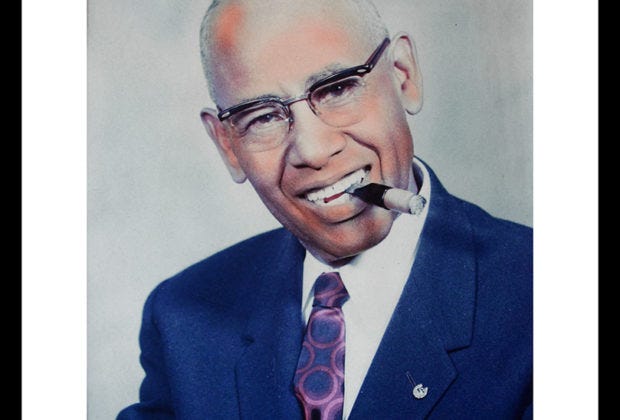
There are places that do more than feed people or entertain them. They gather a neighborhood into itself. They teach people how a neighborhood sounds, how it dresses, how it celebrates, how it remembers itself. For decades, Slim Jenkins Cafe was one of those places in West Oakland.
It was a restaurant, a nightclub, a social center, a place of work, and a stage. It was also something harder to summarize neatly: a symbol of Black Oakland at a moment when the neighborhood was alive with music, commerce, migration, and ambition. To tell the history of Slim Jenkins Cafe is to tell part of the history of Seventh Street itself.
A note on the historical record
This draft follows the strongest documentary record currently located and treats the story with care where the evidence is uneven.
The broad outline is clear. Harold “Slim” Jenkins built one of the most important venues on Seventh Street. The cafe became a major part of West Oakland nightlife and Black public life. The original site was lost during the remaking of West Oakland in the early 1960s. Jenkins reopened elsewhere. He died in 1967.
Two details remain less settled than the rest. The first is the exact opening date in 1933. One archival record ties the beginning of the business to December 5, 1933, the day Prohibition ended. Some later accounts give an earlier date in April of that same year. The second is whether a Slim Jenkins venue continued in any meaningful sense after Harold Jenkins died in 1967. Some later reminiscences blur the chronology of the final years.
Rather than iron those tensions flat, this piece leaves them visible. That matters because places like Slim Jenkins often survive in memory through story, affection, and community repetition as much as through formal recordkeeping. Memory is valuable, but it does not erase the need to distinguish what the record establishes from what later accounts suggest.
That approach does not weaken the story. It strengthens it. Slim Jenkins Cafe deserves to be remembered with accuracy as well as feeling.
The beginning
Harold “Slim” Jenkins was born in Monroe, Louisiana, in 1890. Like many Black southerners of his generation, he became part of the movement westward that reshaped cities such as Oakland in the early and middle decades of the twentieth century. After World War I, he settled in Oakland. Sources describe him first as a waiter, a detail that matters because it places him inside the service economy before he emerged as an owner. He learned how hospitality worked from the inside.
That foundation seems to have mattered. Jenkins did not arrive in Oakland as a famous impresario. He built his public standing step by step, through work, relationships, and an evident instinct for what a neighborhood gathering place could be.
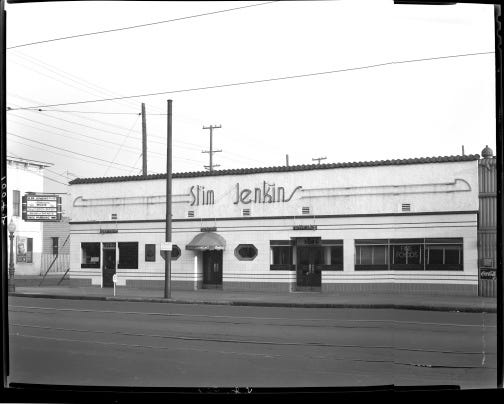
The strongest archival evidence places the beginning of Slim Jenkins Cafe at 1748 Seventh Street on December 5, 1933, the day national Prohibition ended. That timing is striking. Repeal opened a new commercial field, especially for entrepreneurs who understood nightlife, service, and neighborhood demand. Jenkins appears to have seized that moment directly.
Some later historical summaries give an April 7, 1933 opening date instead. At the moment, the December date appears to be the firmer archival anchor, but the discrepancy is worth noting because it reminds us how easily even well-loved local history can accumulate conflicting dates over time.
What seems clear is that the business began in the repeal era as a liquor-related venture and expanded quickly. It did not remain a simple package store or tavern. It developed into a complex public establishment that included dining, drinking, entertainment, and social ritual. In a neighborhood that was growing in population and energy, that combination mattered.
Slim Jenkins was building more than a business. He was building a place people could return to, identify with, and talk about as part of the life of the street.
More than a club
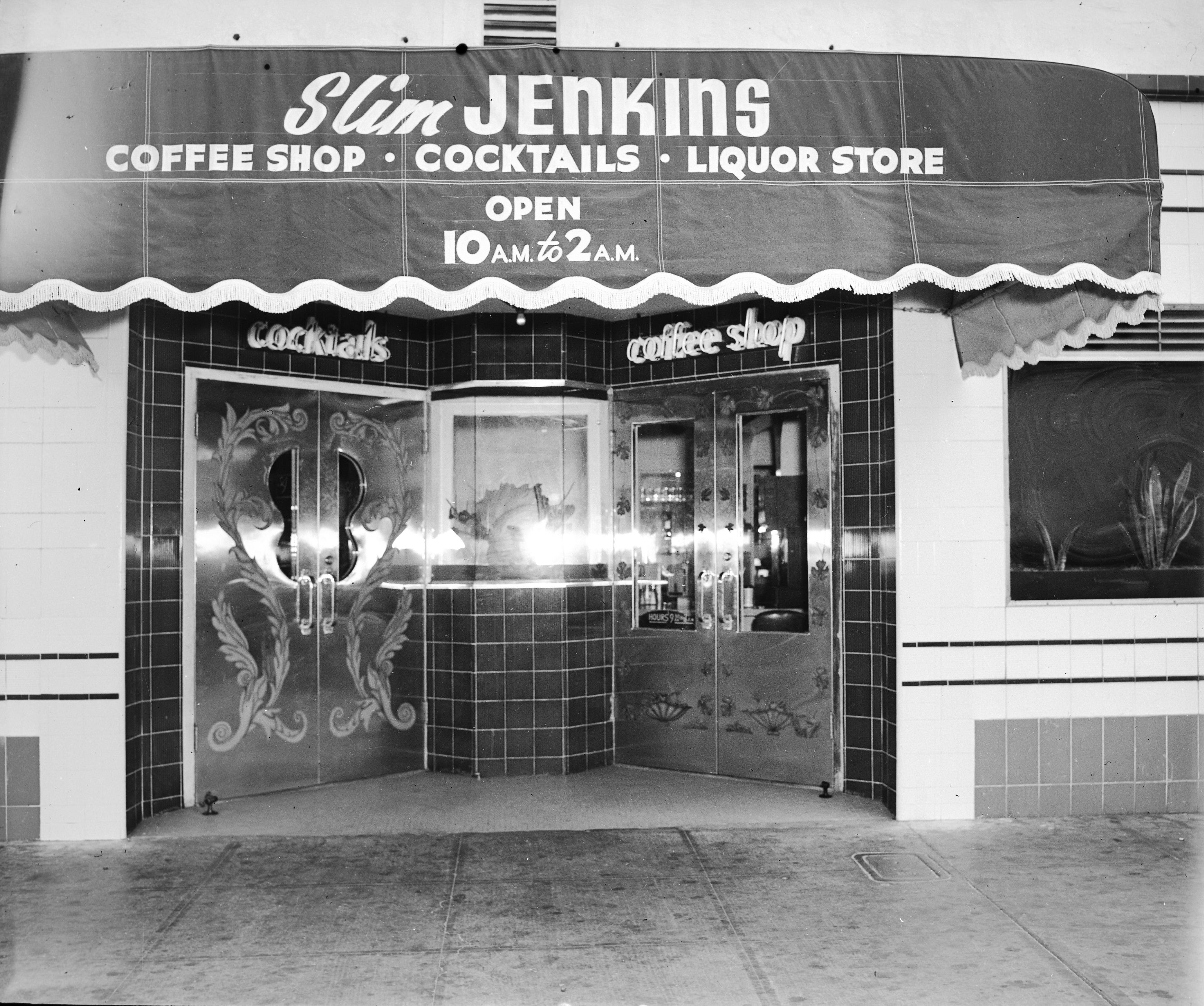
As the business grew, Slim Jenkins Cafe became known for its scale, polish, and range. Contemporary descriptions and later preservation records suggest a place that combined several functions under one name. It was a restaurant where people could eat, a bar where they could drink, a nightclub where they could hear music, and a social room where presence itself mattered.
That mix gave the cafe unusual power. Plenty of places offered food. Plenty of places offered music. Fewer places offered the full experience of a night out with atmosphere, live performance, and the sense that one had entered a room of consequence. Slim Jenkins appears to have done exactly that.
Accounts of the establishment emphasize that it was not merely casual or improvised. It projected occasion. It offered a setting where people could step into a slightly elevated version of everyday life. That matters in the history of Black nightlife because elegance, polish, and comfort were never superficial. They were part of how communities made dignity public.
Slim Jenkins also stood out because of where it stood. Seventh Street was the heart of Black West Oakland for much of the mid-twentieth century. It was a commercial corridor, a social artery, a performance district, and a meeting ground for residents, workers, migrants, musicians, and visitors. Businesses there did not exist in isolation. They formed an ecosystem.
Slim Jenkins belonged to that ecosystem and helped define it. People could eat there, listen there, meet there, celebrate there, and be seen there. The venue gave structure to leisure and visibility to community life.
By the 1940s and 1950s, the cafe was widely remembered as one of the best-known nightlife destinations in Northern California. That reputation did not rest only on advertising language or later nostalgia. It reflects the scale of the place in the historical memory of the district and the repeated way it appears in preservation writing, oral memory, and local history.
To walk into Slim Jenkins was not simply to purchase a meal or a drink. It was to enter one of the rooms that helped define what West Oakland felt like at night.
A stage for Black Oakland
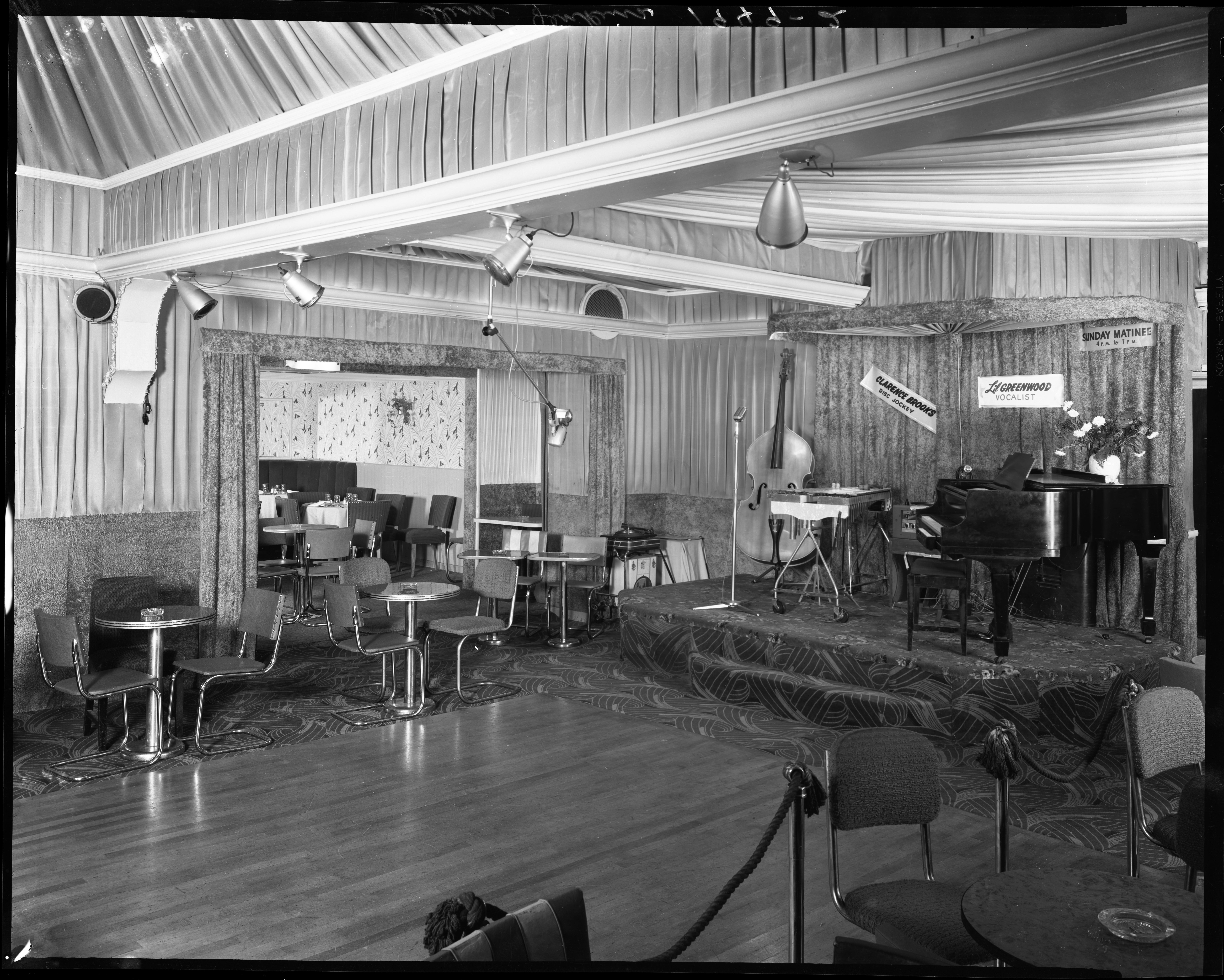
Slim Jenkins Cafe became part of the musical life of Oakland and the wider Bay Area. Historical accounts and preservation materials associate the venue with major Black performers and touring acts, including figures such as the Ink Spots, Dinah Washington, Earl Hines, Louis Jordan, and B.B. King. Those names matter not just because they were famous, but because they place the cafe within the circuit of important performance spaces that connected Oakland to a wider Black cultural geography.
A venue does not host artists like that by accident. To do so requires reputation, infrastructure, audience, and business credibility. Slim Jenkins had all four.
Yet the club’s importance was never limited to famous names on a marquee. The deeper significance of a place like Slim Jenkins lies in its everyday role in cultural life. It gave local musicians work. It let neighborhood audiences hear national acts without leaving their own city. It created a room where music was not an abstract art form but part of the social fabric.
That meant the cafe functioned as more than entertainment. It was a site of circulation: of sound, style, money, connection, and aspiration. The people who entered were not just spectators. They were participants in a social scene that made West Oakland legible to itself.
These spaces mattered because Black cultural life in Oakland was not confined to the stage. It was in the walk to the club, in who greeted whom at the door, in who held a table, in who worked the room, in who got hired, in who listened closely, in who learned what a proper venue could feel like. Slim Jenkins helped stage all of that.
It also functioned as a training ground and workplace. One of the clearest examples is Esther Mabry, who worked at Slim Jenkins as a waitress before later opening Esther’s Orbit Room, another major West Oakland venue. That link is not incidental. It shows how institutions on Seventh Street fed one another. Knowledge moved through labor. People learned the business in one room, then carried that experience into another.
So when we say Slim Jenkins helped shape Black Oakland, we should mean that literally. It shaped not only memory, but careers, social networks, and the neighborhood’s cultural continuity.
The man behind the name
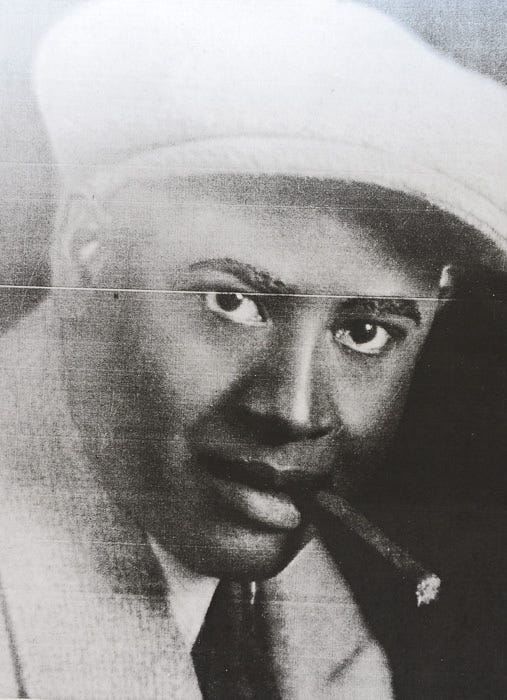
Harold Jenkins became so prominent in West Oakland that he was often described as the unofficial “Mayor of West Oakland.” The title was informal, but it was not empty flattery. It reflected the stature of a businessman whose venue had become one of the district’s central institutions.
That kind of standing does not emerge from ownership alone. It suggests familiarity, visibility, and influence. Jenkins appears to have become one of those neighborhood figures whose name meant more than one storefront. It carried a reputation. It traveled.
Archival descriptions indicate that Jenkins owned and operated multiple businesses over time, including restaurants, liquor stores, and clubs. That record helps explain why his name retained such force. He was not a one-room proprietor whose identity depended on a single address. He was part of a broader Black commercial presence in Oakland.
In that sense, Slim Jenkins represented a particular kind of local success. He built a business in a segregated and unequal society, and he did so in a way that made him a recognizable civic figure in West Oakland. His success was not only personal. It became symbolic.
That symbolic role matters in understanding why the place survives so strongly in memory. People were not merely remembering a building, a sign, or a menu. They were remembering a person whose presence helped give form to the social world around him.
There is also something important in the scale of that memory. When communities repeatedly attach a place to a person by name, it often means the owner was perceived not only as a businessman but as a host, a node of recognition, someone who made the room feel organized and alive. Slim Jenkins appears to have been that kind of figure.
Seventh Street at its height
To understand Slim Jenkins Cafe, it helps to place it inside the larger history of Seventh Street.
For decades, West Oakland’s Seventh Street corridor was one of the most important Black entertainment and commercial districts in Northern California. It was sustained by rail work, port labor, wartime industry, and the migration of Black families into Oakland over the course of the twentieth century. People arrived looking for work, stability, and possibility. They also built institutions. Seventh Street was one of the clearest expressions of that process.
The corridor was crowded with life. Clubs, bars, cafes, restaurants, stores, service businesses, and music venues gave the district its energy. It was a place of commerce during the day and a place of gathering after dark. The street carried both ordinary necessity and glamour.
That dual character mattered. Neighborhoods become durable not only when people can live in them, but when they can inhabit them socially. Seventh Street offered that. It gave Black Oakland a public sphere of its own, shaped by labor, migration, music, and entrepreneurial skill.
Slim Jenkins was one of the places that gave the district its texture and status. It offered style, continuity, and a visible center of gravity. A place like that does not merely reflect a neighborhood’s vitality. It helps organize it.
That is part of why the loss still feels so large. People are not only mourning a famous venue. They are mourning an entire ecology of belonging. Slim Jenkins was one room within that ecology, but it was one of the rooms that people remembered most clearly.
To write about Slim Jenkins, then, is also to write about a period when West Oakland held a dense, self-sustaining cultural world that many later city narratives have only partially preserved.
Displacement and the first ending
The first major ending came not because the institution had exhausted itself, but because the neighborhood around it was being remade.
By the early 1960s, redevelopment, freeway construction, post office expansion, and other forms of urban renewal were tearing through West Oakland. Streets were cut apart. Blocks were demolished. Communities that had built durable social life under difficult conditions were forced to absorb another form of displacement, this time through policy, planning, and infrastructure.
Seventh Street’s social and commercial fabric was damaged block by block. Businesses that depended on foot traffic, density, routine, and neighborhood continuity could survive only so much physical disruption before the wider ecosystem began to fail.
In 1962, the original Slim Jenkins site on Seventh Street was razed, reportedly to make way for a gas station. That fact lands with special force because of what the venue represented. The demolition did not merely remove one address. It severed part of a living corridor whose meaning had been built over decades.
The destruction of Slim Jenkins belongs within the larger history of Oakland policy. It was part of a broader pattern in which infrastructure projects and redevelopment displaced Black communities, weakened established business districts, and shattered the everyday spaces that held neighborhood life together. These losses were often described in the language of progress. On the ground, they looked like erasure.
That is why recollections of Slim Jenkins often carry more than nostalgia. They carry injury. They register the feeling that something carefully built was not simply outlived or replaced, but broken apart by outside decisions.
So when people remember Slim Jenkins with grief, reverence, or unfinished anger, they are often remembering more than a club that closed. They are remembering a neighborhood order that was made vulnerable and then dismantled.
The Broadway years
Jenkins did not stop immediately. The destruction of the Seventh Street site was not the same thing as surrender.
Before the original location disappeared, he appears to have been looking for a way to continue the business elsewhere. Newspaper records indicate that in 1961 he sought a cabaret license for 975 West Grand Avenue and met opposition from nearby churches. That detail offers a useful glimpse into the pressures of the era. Nightlife businesses were never only about entertainment. They also had to navigate licensing, local politics, and shifting neighborhood boundaries.
By 1962, reports show Jenkins planning a new cabaret at 310 Broadway. Advertisements from 1964 place Slim Jenkins at that address, near what was then associated with the Jack London area. That move created a second chapter in the institution’s life.
This Broadway period matters for more than chronology. It shows that Slim Jenkins was not reducible to one building. Jenkins was trying to preserve a social institution even after the street that had shaped it was being broken apart.
At the same time, relocation could not fully restore what had been lost. The original Seventh Street room drew part of its meaning from its setting. It lived inside a dense Black commercial district that held many related businesses and venues in close conversation with one another. A new address might keep the name alive, but it could not simply recreate the world that had made the name powerful.
That is what makes the Broadway years poignant. They show persistence, adaptation, and business will. They also show the limits of survival when the surrounding neighborhood ecology has already been damaged.
The story did not end all at once, but it had already been altered at the root.
The end
The clearest documented endpoint comes in May 1967, when Harold “Slim” Jenkins died at age 76. The strongest local summaries indicate that he operated the Broadway club until his death.
That date provides the firmest end point currently available for the institution as Jenkins built it. Once the founder was gone, the question becomes whether the business continued in name only, in altered form, or not at all. The historical record is not yet clean enough to answer that with complete certainty.
Some later reminiscence pieces suggest a Slim Jenkins move to Jack London Square in 1972, but that claim conflicts with the documentary fact of Jenkins’s death in 1967. It is possible that later memory compressed the Broadway period, the Jack London area, and the long afterlife of the name into a single blended story. It is also possible that some later use of the name has not yet been documented through the sources currently in hand.
Without stronger primary evidence, the safest conclusion is that the original institution effectively ended with Jenkins’s death, even if the public memory of Slim Jenkins continued to stretch beyond that point.
In other words, the end came in stages.
The building on Seventh Street was lost in 1962.
The business name continued at Broadway for a time.
The institution, in the deepest sense, seems to have ended with the death of the man who built it and with the destruction of the neighborhood world that had sustained it.
That distinction matters because institutions are not just licenses or leases. They are relationships among people, place, habit, and recognition. Once those relationships are broken, something essential has ended even if a sign remains.
What remains
Slim Jenkins Cafe survives now in archives, photographs, preservation records, oral history, and neighborhood memory. In some ways that is fitting. A place that once gathered so much public life now survives through the traces people protected after the physical room was gone.
The Oakland Public Library’s African American Museum and Library at Oakland preserves a Harold Jenkins photograph collection and related material connected to Seventh Street history. Those archives matter because they help keep the story anchored in material evidence rather than nostalgia alone. They let later generations see that Slim Jenkins was not a mythic invention. It was a real place, part of a real district, built by real people.
The name also survives in Oakland’s civic landscape, including Slim Jenkins Court, a later housing development. Naming is never neutral. When a city preserves a name in that way, it signals that the person and the institution still matter to the local historical imagination.
But the most important form of survival may be communal rather than official. Slim Jenkins persists because people still tell stories about it. Elders remember it. Historians of Seventh Street return to it. Preservation writing repeatedly circles back to it as one of the defining sites of Black Oakland’s mid-century life.
That afterlife tells its own story. Some places continue because the doors stay open. Others continue because communities refuse to let them vanish entirely from public memory.
Slim Jenkins Cafe belongs to the second category now. It lives in the archive, in the neighborhood’s spoken history, and in the unfinished effort to account honestly for what West Oakland once built and what the city later allowed to be broken.
Why it still matters
Slim Jenkins Cafe was never just a venue. It was a place where music, labor, food, ambition, migration, and Black social life converged. It fed people. It entertained them. It gave them a room to gather in. It offered elegance and familiarity at once.
That combination helps explain why the place continues to carry such emotional force. It was not important only because celebrities passed through or because a few newspaper ads once called attention to it. It was important because it organized ordinary life. It gave people a place to go, a place to work, a place to celebrate, and a place to belong.
To write about Slim Jenkins is therefore to write about West Oakland at its height. It is also to write about what was lost when public policy, urban renewal, and infrastructure projects shattered a district that had taken decades to build.
This is not only a story about nightlife. It is a story about Black business, Black migration, Black labor, Black elegance, and Black public space. It is about the creation of a neighborhood world and the damage that followed when that world was treated as expendable.
That is why the history still matters.
Not only because stars once passed through.
Because ordinary people did too.
Because the room held a neighborhood.
Because when the room was lost, the loss was larger than the room.
Sources
Archival and institutional sources
Oakland Public Library, African American Museum and Library at Oakland. “Harold Jenkins Photograph Collection.”
https://oaklandlibrary.org/archival_post/jenkins-harold-photograph-collection/
California Office of Historic Preservation. “African Americans in California, 1850-1970 MPS (draft).”
https://ohp.parks.ca.gov/pages/1067/files/CA_Multiple%20Counties_African%20Americans%20in%20CA%20MPDF_DRAFT.pdf
Sights & Sounds: The Cultural Landscape of Seventh Street, Oakland, California.
https://static1.squarespace.com/static/5d01a7efbf4ae50001f78eaf/t/61d7bbe680eb4a1b8992541c/1641528307822/Groth%2C%2BGutman%2Bet%2Bal%2BSights%2Band%2BSounds%2B1997.pdf
Historical reporting and local history
UC Berkeley Graduate School of Journalism, 7th Street Archive. “Clubs” category.
https://projects.journalism.berkeley.edu/7thstreet-archive/category/clubs/
Local News Matters. “Harlem of the West: Oakland’s once-bustling jazz and blues scene along Seventh Street.”
https://localnewsmatters.org/2020/05/06/harlem-of-the-west-oaklands-once-bustling-jazz-and-blues-scene-along-seventh-street/
KALW. “Esther’s Orbit Room builds on its history as a West Oakland cultural hub.”
https://www.kalw.org/2024-04-17/esthers-orbit-room-builds-on-its-history-as-a-west-oakland-cultural-hub
Newspaper records and archive references
Newspapers.com. “Slim Jenkins Applies for Cabaret License” (Oakland Tribune archive reference).
https://www.newspapers.com/article/oakland-tribune-slim-jenkins-applies-for/52483252/
Newspapers.com. “Rites for Slim Jenkins” (Oakland Tribune archive reference, May 24, 1967).
https://www.newspapers.com/article/39572155/rites_for_slim_jenkins_may_24_1967/
California Digital Newspaper Collection / Oakland Tribune archive page reference.
https://cdnc.ucr.edu/?a=d&d=OT19640713.1.74